Common troubleshooting questions in confocal microscopy
Most focus drift on a confocal comes from heat, and you can head off most of it before the first frame. Here is what to check, in order.
Which cause fits what you see?
| What you see | Likely cause | First check |
|---|---|---|
| Drift is worst in the first hour or two of a session, then slows | The stand is still warming up after power-on Reference [1] | Have the whole system on 2 hours before imaging, and let the sample sit on the stage for 15 minutes Reference [2] |
| Drift starts when the stage heater or incubator comes on | The metal stand expands as it warms Reference [1] Reference [4] | Switch the heating on at least 2 hours ahead Reference [8] |
| Live cells at 37 °C under an immersion objective drift steadily | The unheated objective acts as a heat sink Reference [1] | Add an objective heater when you use a stage-top incubator Reference [1] |
| Focus shifts after people come and go | Room temperature changes, for example from opening doors Reference [4] | Keep doors closed during long runs and note when the shifts happen |
| The focus lock is on but the plane still wanders, or it loses lock between wells | The lock has no usable reflection, or it crosses well walls Reference [3] Reference [5] Reference [7] | Check the sample medium, and re-engage the lock at each position Reference [3] Reference [7] |
| A long run with a water objective fades and loses focus | The water evaporates Reference [8] | Use water immersion oil (RI 1.334) for long runs Reference [8] |
| Signal and axial resolution drop at 37 °C with an oil objective | Oil specified for 23 °C used at 37 °C Reference [9] | Use an immersion oil rated for 37 °C Reference [10] |
On a confocal, focus drift rarely looks like blur. Because the pinhole rejects out-of-focus light, a focal plane that slides by a micron makes the image dim while different structures move into the optical section Reference [1]. So the laser gets blamed first.
The drift itself is common. In a published tutorial written by imaging facility scientists, a new confocal drifted more than 1 µm every 10 minutes in the first hour after power-on, even on a fixed slide at stable room temperature, and took several hours to settle Reference [1]. The authors tested 8 stands from 4 manufacturers. Every one drifted to some degree, and some never stopped Reference [1].
We started digging into this because microscopy has become the largest group of questions we see on Rayni outside chromatography and mass spectrometry, and focus, z-stacks and startup routines come up again and again. Below are common symptoms of focus problems, with the likely cause and a sourced check for each.
Focus drifts most in the first hour or two of a session
Check the warm-up time first. Focus drift is worst in the first hour after power-on, and in the tutorial's measurements the built-in focus moved more than 1 µm every 10 minutes during that hour Reference [1]. The authors asked manufacturers to adopt a standard of less than 1 µm of drift per hour by the end of the first hour Reference [1].
The confocal core at the National Cancer Institute gives its users two rules, which are to switch the whole microscope on 2 hours before any experiment and to let the sample sit on the microscope for 15 minutes before imaging Reference [2]. Morning live cell runs need more. The core suggests leaving the microscope on from the day before Reference [2].
Even a settled system moves a little. Andor puts typical drift at 2 to 3 µm over a 12 hour time-lapse in a room held to about ±1 °C, and high resolution objectives suffer most because their depth of focus is shallow Reference [6].
How Rayni helps: In our anonymized, aggregated user data, some people simply ask what drift is. Rayni answers that kind of question from your microscope's own manual and your facility's SOPs, so the reply covers the warm-up time and startup order for that exact system and shows where each step came from.
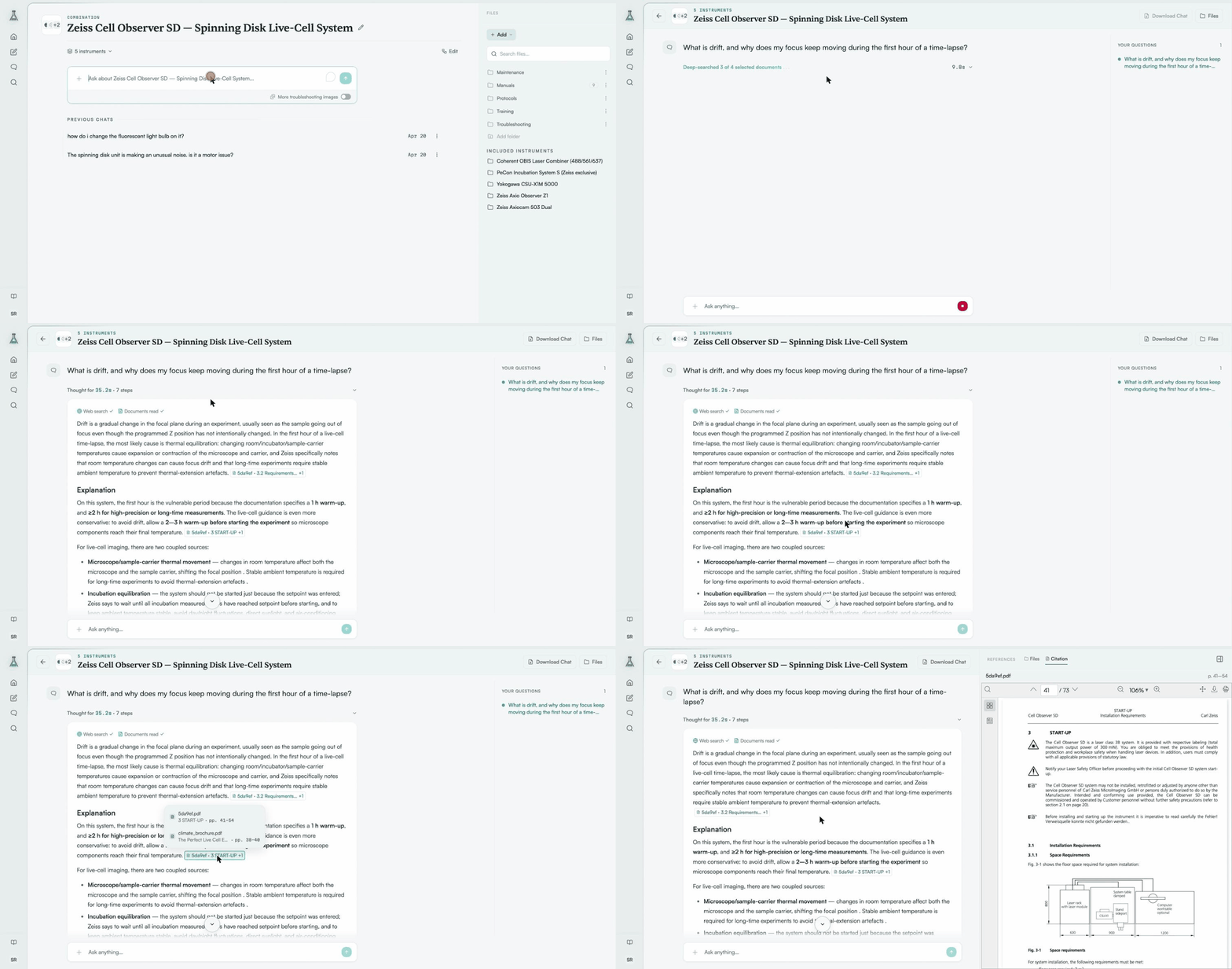
Figure 1. Recreated on a demo ZEISS Cell Observer SD spinning disk from anonymized, aggregated user questions. Rayni cites the warm-up times in the manual's start-up chapter and opens the page.
Focus shifts when the heater, incubator or room temperature changes
Turning on an environmental chamber shifts the focus, because small temperature changes expand the metal microscope stand Reference [1]. ZEISS says the same. It names the mechanical expansion of components during heat-up as the main cause of drift, and it lists doors opening in the room as another Reference [4]. At Turku Bioscience, the ZEISS LSM 880 guide asks users to switch the heating on at least 2 hours before live cell imaging Reference [8].
Heating the dish is not enough when an immersion objective touches it. With a stage-top incubator, an unheated immersion objective draws heat out of the sample, so the tutorial authors call for a separate objective heater Reference [1].
How Rayni helps: Ask something like "how early should I turn on the incubator before a 37 °C time-lapse?" and Rayni answers from your facility's own guide and the manufacturer's manual, with the source next to each step.
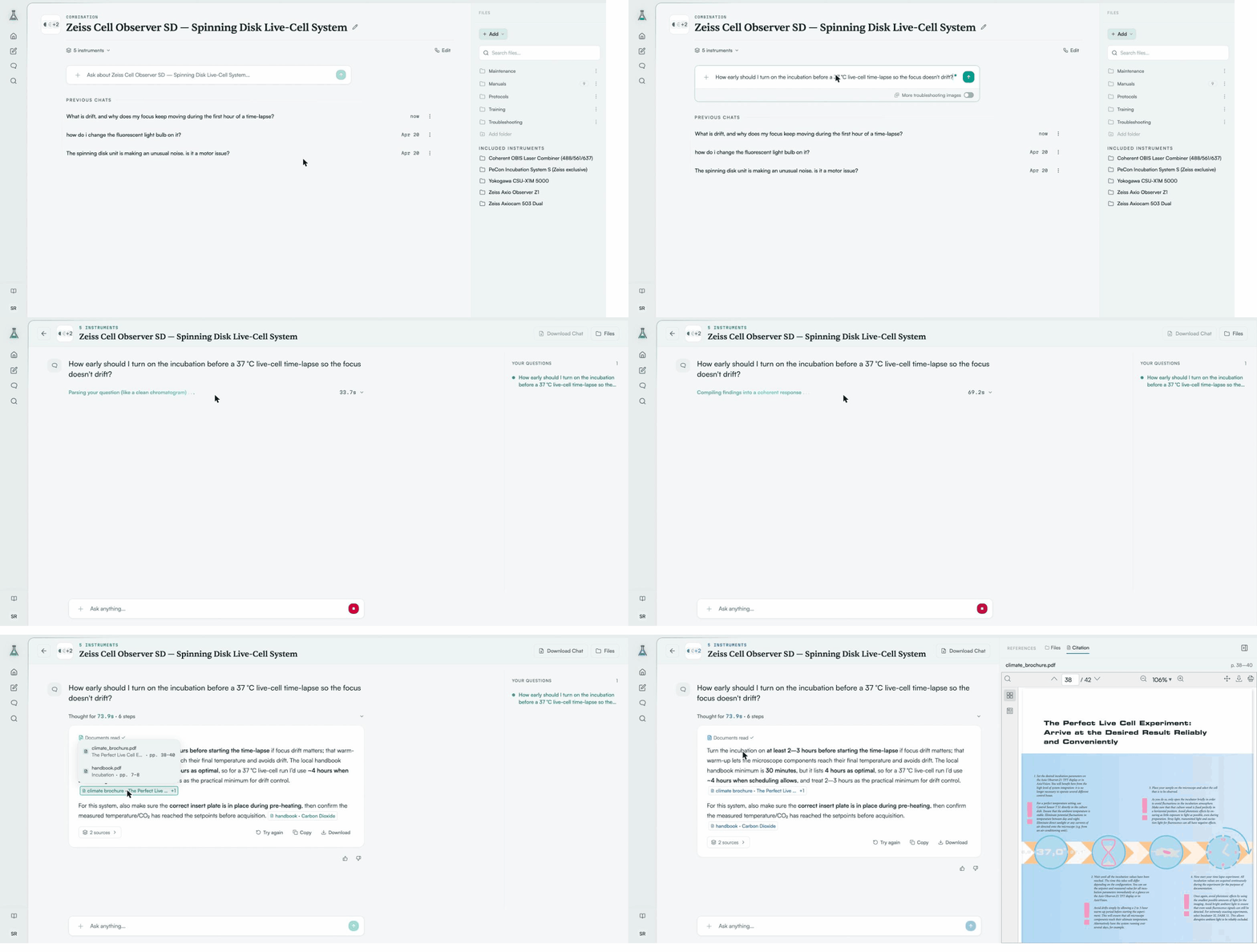
Figure 2. Recreated on a demo system from anonymized, aggregated user questions. Rayni combines the manufacturer's guidance with the facility handbook and shows both sources.
The focus lock is on, but the plane still wanders
Because drift is so common on microscope stands, the tutorial recommends a hardware focus lock for time-lapse work, such as ZEISS Definite Focus, Nikon Perfect Focus, Leica AFC or Olympus ZDC Reference [1]. Each one locks onto a reflection, and a reflection only forms where the refractive index changes Reference [5].
This matters for fixed samples. The NCI core notes that Definite Focus needs the sample in a medium with a lower refractive index than glass, so it does not work with mounting media Reference [3]. Leica's AFC behaves differently, following the brightest reflection it sees, which with an oil objective is the glass-to-medium interface. A water objective produces two reflections, and the lock usually follows the water-to-glass one Reference [5].
Multi-well runs add their own trap. In a 2026 image.sc thread, a Nikon Perfect Focus user lost the lock every time the stage crossed the wall between wells of an 8-well chamber slide. The fix was a setting in the acquisition software that engages the lock at each position before imaging and releases it while the stage moves Reference [7].
How Rayni helps: How to run autofocus and set up the focus lock are recurring questions in our anonymized user data. Because Rayni answers from the documentation for that exact stand, the steps match the software in front of them.
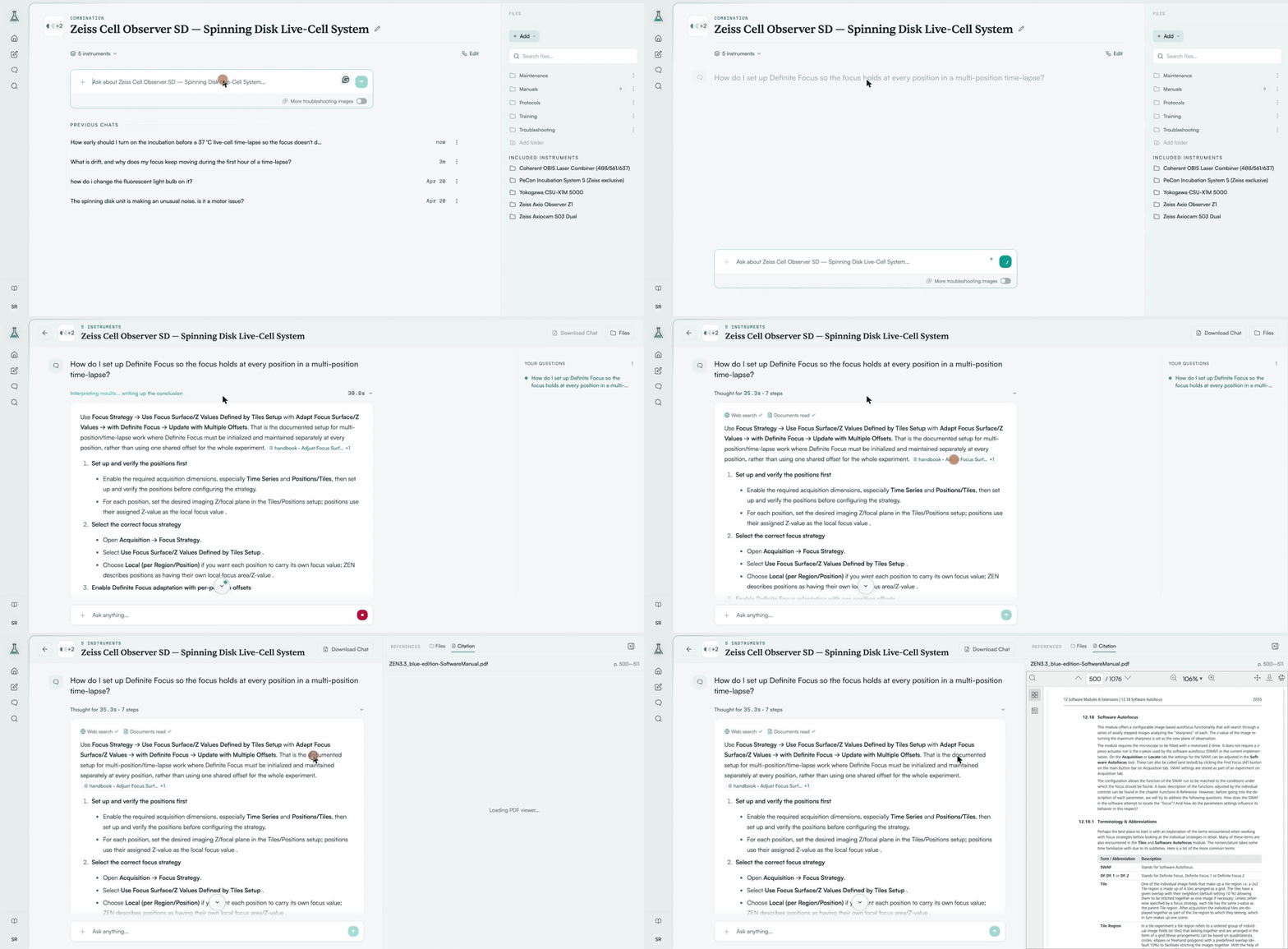
Figure 3. Recreated on a demo system from anonymized, aggregated user questions. The steps match the ZEN menus, and the cited software manual section opens beside the answer.
Long runs with an immersion objective fade or lose focus
Water evaporates during long runs, so the Turku guide recommends water immersion oil with a refractive index of 1.334 for long experiments, and it forbids mixing immersion oils Reference [8]. Temperature matters for oil too. A study in the Journal of Microscopy found that standard oil made for 23 °C greatly compromises both axial resolution and signal intensity when used at 37 °C Reference [9]. ZEISS sells Immersol 518 F in versions specified for 23, 30 and 37 °C Reference [10].
How Rayni helps: Air bubbles in the oil come up in our aggregated user questions, usually with a follow-up about adding more oil. Rayni walks through the oil type, the amount and how to apply it for that objective, citing the manual it used.
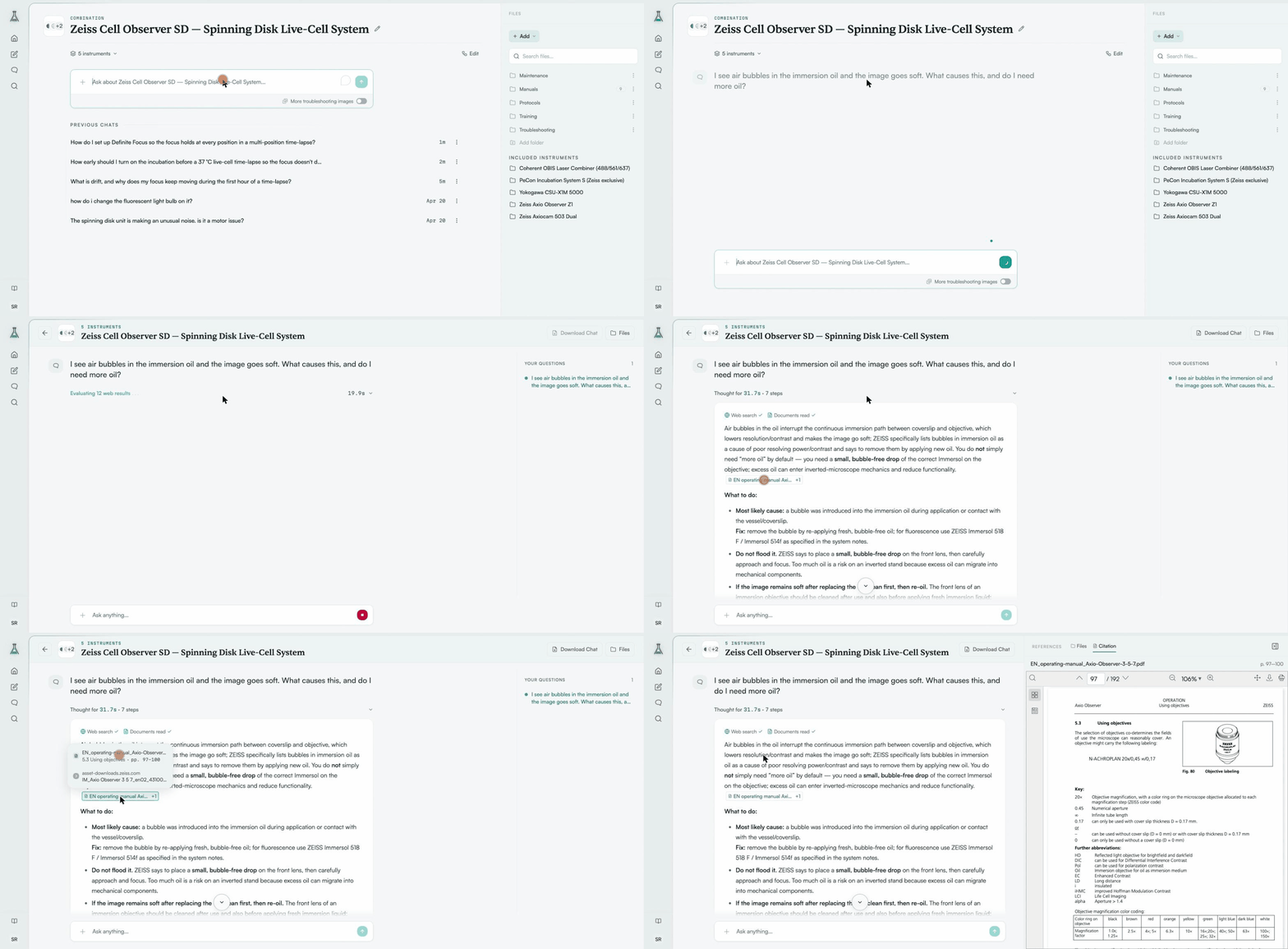
Figure 4. Recreated on a demo system from anonymized, aggregated user questions. The answer points to the objectives chapter of the Axio Observer operating manual.
Intensity changes, but nothing new comes into focus
If the intensity changes but no new structures appear in the section, look at the laser before the focus. Lasers drift too. The tutorial found one visible laser on a heavily used system fluctuating by about 12% continually, and the facility staff had not known Reference [1]. One femtosecond laser for multiphoton work re-optimized itself 30 minutes after start-up, then changed power by a further 15% when retuned to a new wavelength Reference [1].
How Rayni helps: Users also ask whether it is bad to run at maximum laser power. Rayni answers with the laser and detector guidance written for that system and points to where each recommendation comes from.
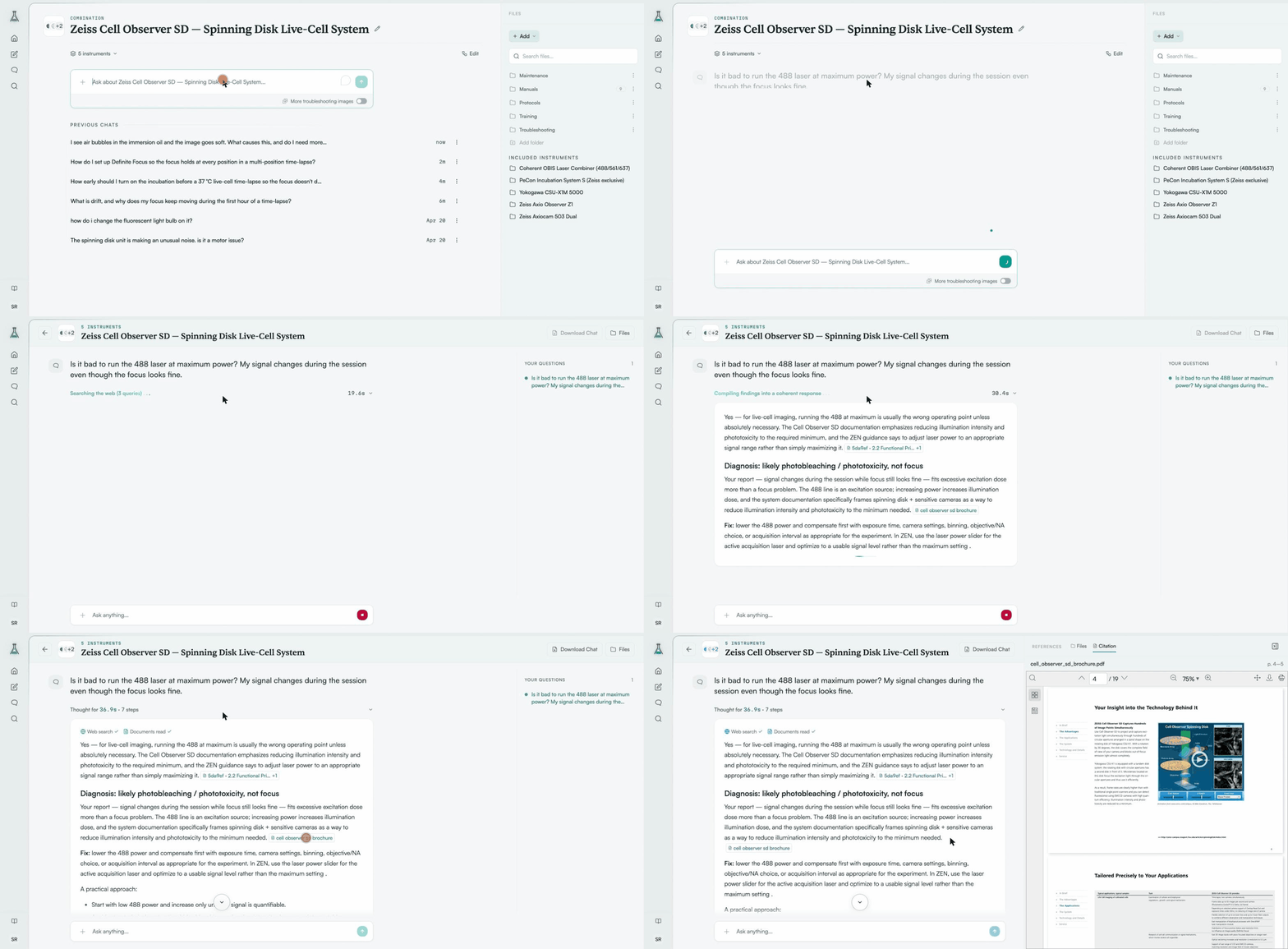
Figure 5. Recreated on a demo system from anonymized, aggregated user questions. Rayni separates a laser or photobleaching problem from a focus problem and cites the system documentation.
The drift is already in a finished time-lapse
Some drift you can plan around. Andor suggests acquiring a deeper z range than the specimen needs, so a 10 µm stack becomes at least 12 µm, at the cost of about 20% more light on the sample Reference [6]. Afterwards, Fast4DReg in Fiji can estimate and correct the drift between time points without fiducial markers Reference [6].
If your stand keeps drifting after warm-up, a heated objective and a working lock, the cause may be mechanical. The tutorial authors recommend testing focus drives and replacing faulty ones on a regular basis Reference [1].
How Rayni helps: Rayni is useful after the run too. Ask how to correct drift in a finished time-lapse, and it lays out the options with the sources it drew on.
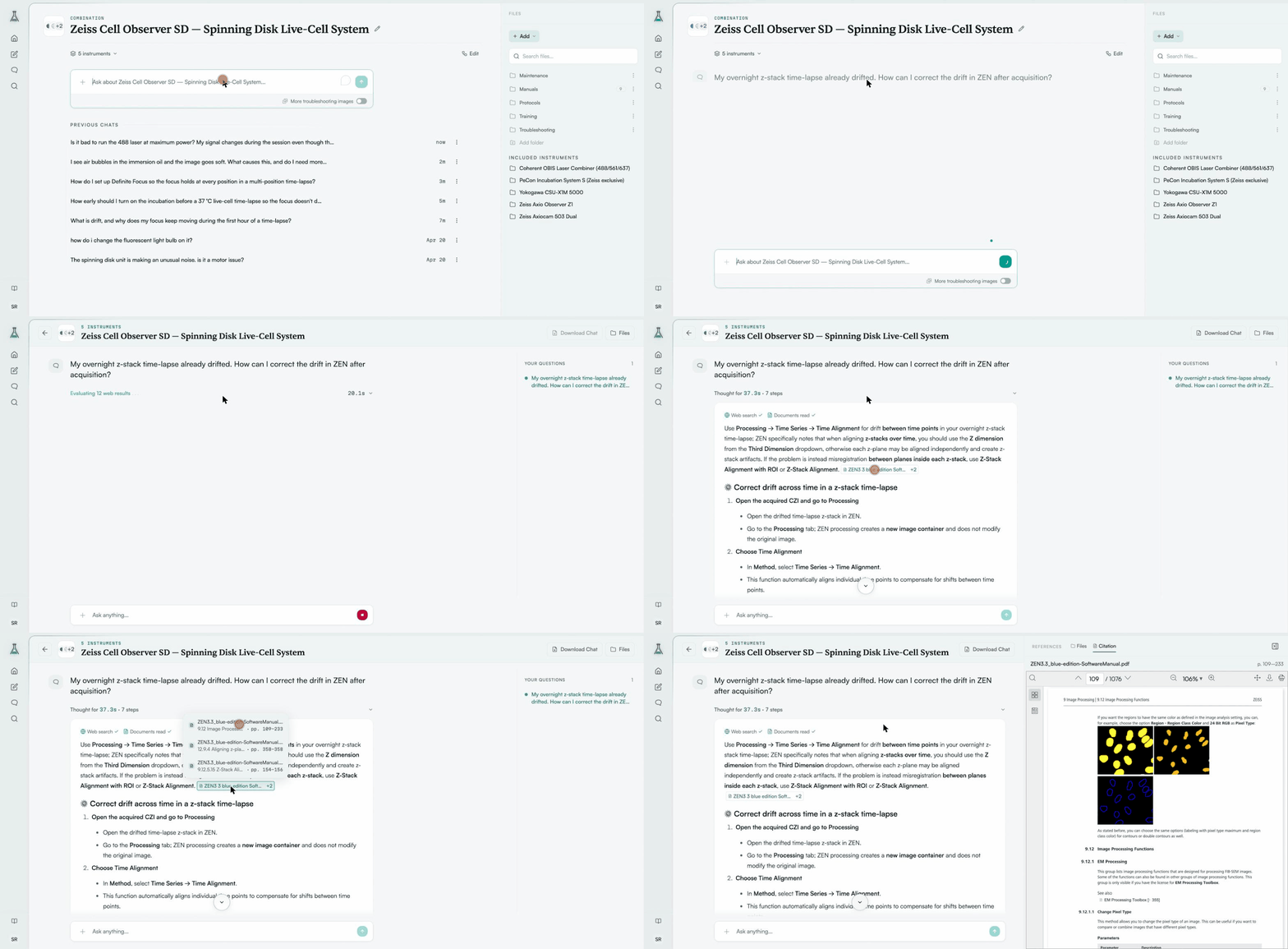
Figure 6. Recreated on a demo system from anonymized, aggregated user questions. For a finished run, Rayni points to the image processing functions in the ZEN manual.
Want to see how Rayni handles your instruments? Pick two of your trickiest recent problems and try them at www.rayni.ai.
References
All sources accessed October 20, 2026.
- Jonkman J, Brown CM, Wright GD, Anderson KI, North AJ. Tutorial: guidance for quantitative confocal microscopy. Nature Protocols 15, 1585-1611 (2020). Author manuscript.
- National Cancer Institute, CCR Optical Microscopy and Analysis Laboratory. Multi-Position Time Series on the LSM710 (2024).
- National Cancer Institute, CCR Confocal Microscopy Core. LSM780 MultiTime with Definite Focus (2019).
- Carl ZEISS. Definite Focus application note, hosted by the Technion Biomedical Core Facility.
- Leica Microsystems. AFC: Be in Focus, Always, hosted by the University of Geneva Bioimaging Center.
- Andor, Oxford Instruments. Drift and drift correction in time-lapse microscopy.
- image.sc forum. Nikon Eclipse Ti PFS system help (June 2026).
- Turku Bioscience. ZEISS LSM 880 user guide (2019).
- Oomen LCJM, Sacher R, Brocks HHJ, Zwier JM, Brakenhoff GJ, Jalink K. Immersion oil for high-resolution live-cell imaging at 37°C: optical and physical characteristics. Journal of Microscopy 232, 353-361 (2008).
- Carl ZEISS. Immersion media.